



Effective tax planning is essential to running a financially healthy business. It helps businesses understand their tax obligations, manage cash flow, identify legitimate tax-saving opportunities, and avoid unnecessary penalties or compliance issues. A business tax consultant can provide professional guidance by analyzing the company's financial position and developing a tax strategy that aligns with its business goals.
What Is Business Tax Planning? Business tax planning is the process of organizing a company's finances, transactions, expenses, investments, and business activities in a way that helps manage its tax liability while remaining compliant with applicable tax laws.
Instead of waiting until the end of the financial year, businesses can work with a tax consultant throughout the year to make informed financial decisions.
How Can a Business Tax Consultant Improve Tax Planning?
- Analyze the Company's Financial Position. A tax consultant reviews important financial information such as:
Revenue and business expenses
Profit and loss statements
Investments and assets
Loans and interest expenses
Previous tax returns
Applicable tax deductions and incentives
This analysis helps identify areas where better tax planning may be possible.
- Identify Legitimate Tax-Saving Opportunities: Businesses may be eligible for various deductions, exemptions, incentives, or other tax benefits depending on their business structure and applicable laws.
A tax consultant can review the company's activities and records to identify legitimate tax-saving opportunities while ensuring that the business does not rely on aggressive or non-compliant tax practices.
- Plan Taxes Throughout the Year. One of the biggest advantages of professional tax planning is that it does not have to be a year-end activity.
A consultant can periodically review the business's financial performance and estimate its potential tax liability. This allows the business to plan its cash flow and make financial decisions before tax deadlines arrive.
- Select an Appropriate Business Structure. The structure of a business can have significant tax and compliance implications.
Depending on the circumstances, businesses may operate as a sole proprietorship, partnership, LLP, company, or another legal structure. A tax consultant can explain the tax implications of different structures and coordinate with legal or corporate professionals where necessary.
The right structure should be selected based on the overall business requirements rather than tax considerations alone.
- Improve Expense and Record Management. Proper documentation is an important part of tax planning.
A consultant can help businesses establish processes for maintaining:
Purchase invoices
Sales invoices
Expense records
Bank statements
Payroll records
Investment documents
Tax-related documents
Better records make it easier to substantiate legitimate expenses and prepare accurate tax returns.
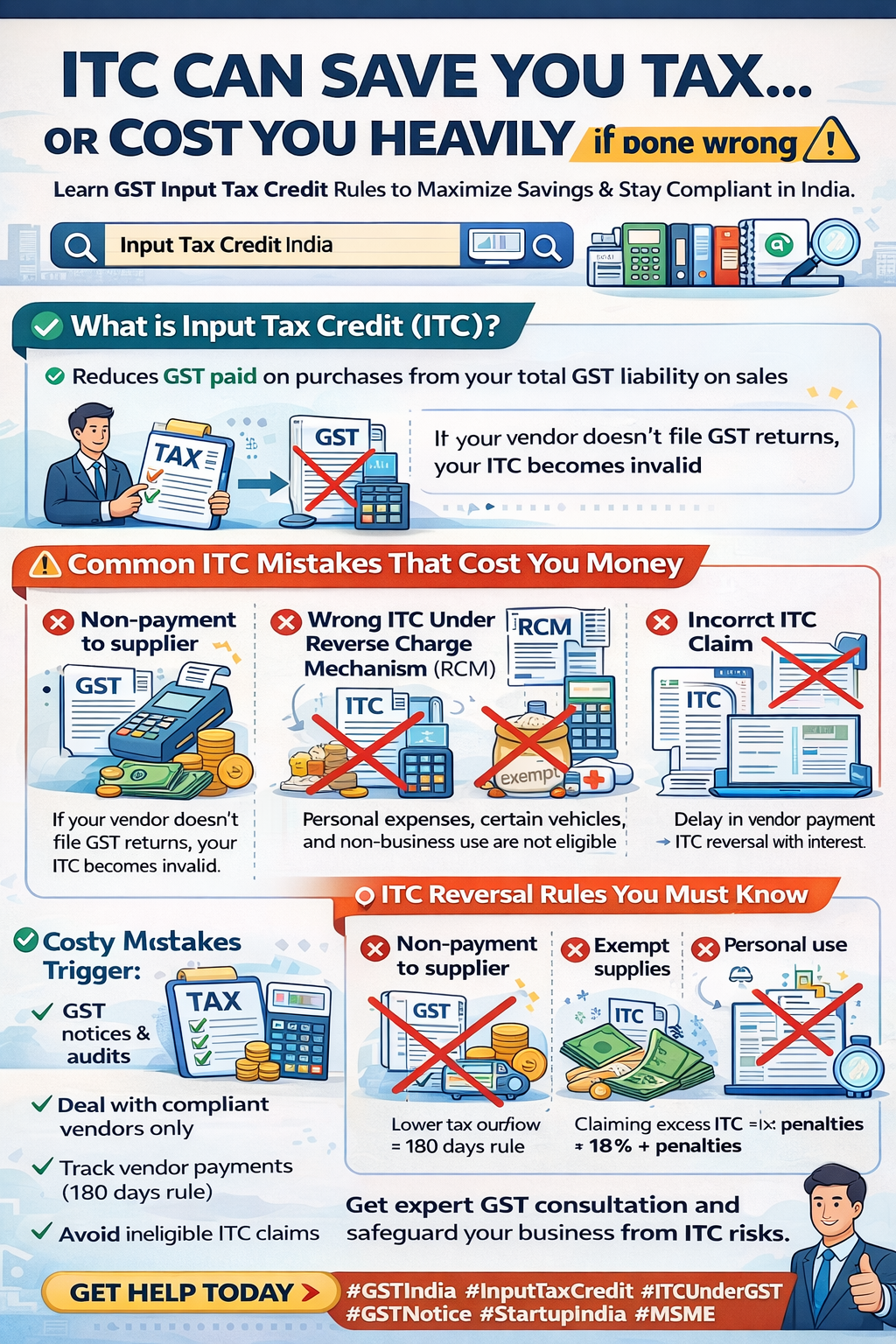
- Manage GST and Other Indirect Tax Compliance. For businesses registered under GST, tax planning also involves monitoring GST-related transactions and compliance.
A consultant can help review areas such as:
GST registration requirements
Input Tax Credit records
Tax invoices
GST return filing
Reconciliation of books with GST data
Applicable Reverse Charge provisions
Regular reconciliation can help identify discrepancies before they become larger compliance problems.
- Forecast Tax Liability: Unexpected tax liabilities can put pressure on business cash flow.
A tax consultant can use financial projections to estimate potential tax obligations. The business can then set aside funds and plan its working capital accordingly.
For example, if projected profits increase significantly during the year, the business can review its tax position in advance instead of facing an unexpected liability at year-end.
- Help With Investment and Asset Decisions: Purchasing equipment, vehicles, technology, or other business assets can have tax implications.
Before making a major investment, a business can consult its tax professional to understand the relevant depreciation, deductions, GST implications, and documentation requirements.
This allows the company to consider both the commercial and tax consequences of an investment.